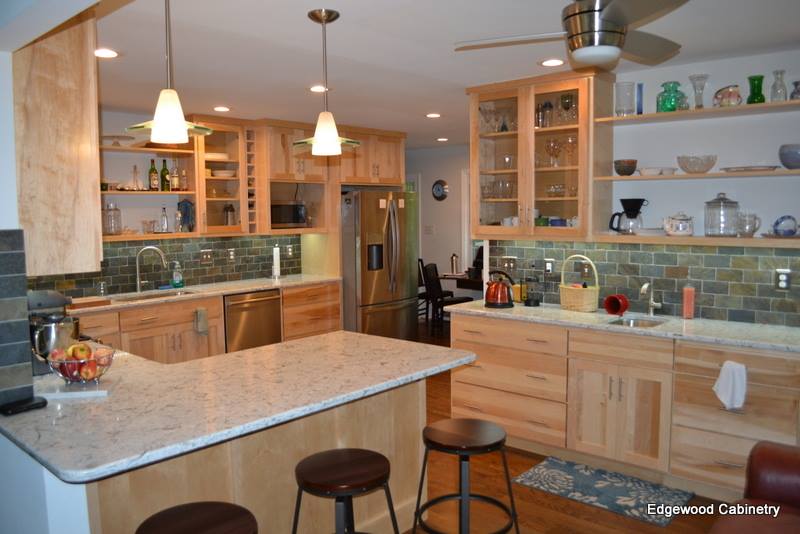
With the holiday season comes a flood of magazine articles and blog posts on cooking meals for large numbers of guests and trying out new recipes for winter treats. It’s also a good time of year to step back and take a hard look at your kitchen. What needs improvement? What plans should you make for the fast-approaching new year to optimize your kitchen space design for cooking and spending time with loved ones?
The following are three important problems to consider:
1) Your kitchen triangle is suboptimal.
Kitchens are generally designed around the idea of the “kitchen triangle,” which involves three key points in your kitchen: fridge, sink, and cooking area (basically, the stove and oven). You should be able to move between these locations easily, without worrying about crossing too long a distance or stumbling against cabinetry when you have a delicate jar or full boiling pot in hand.
Another problem is when people use one of the paths in your kitchen triangle to just walk across the kitchen, possibly blocking you in the middle of cooking; anyone just cutting across the kitchen should be able to go through an alternate route, and not through the area where you’re working.
2) You don’t have enough counter space
For many people, this is a major problem. Lack of counter space impedes food preparation and other aspects of cooking. You may also have trouble washing dishes at the sink or using your stove if there isn’t enough adjacent space to place pots, pans and other dishes.
3) You don’t have sufficient or efficient cabinet space
Either you don’t have enough cabinetry or your cabinetry isn’t efficient, resulting in wasted space. Cabinetry is an essential part of the kitchen, both for practical and aesthetic purposes.
You need to evaluate your cabinets to see if you’re making good use of their interiors and if they’re designed in such a way that you’re maximizing the amount of space in your kitchen. You can also use cabinets creatively – for example, installing some your appliances behind cabinets where they don’t have to take up space when they’re not in use. Well-designed cabinetry results in a kitchen that’s more beautiful, less cluttered, and better organized.
To discuss optimal kitchen space design, please contact us. The solutions you come up with need to be tailored to the space you’re working with and to your needs and tastes. We can help you come up with a beautifully designed kitchen that you’ll love.